A few kilometers before getting to Khong Chiam town is a beautiful temple. It was built in the 1970’s by a famous Vipassana meditation master, after he discovered a small cave and decided it would be suitable for meditation.
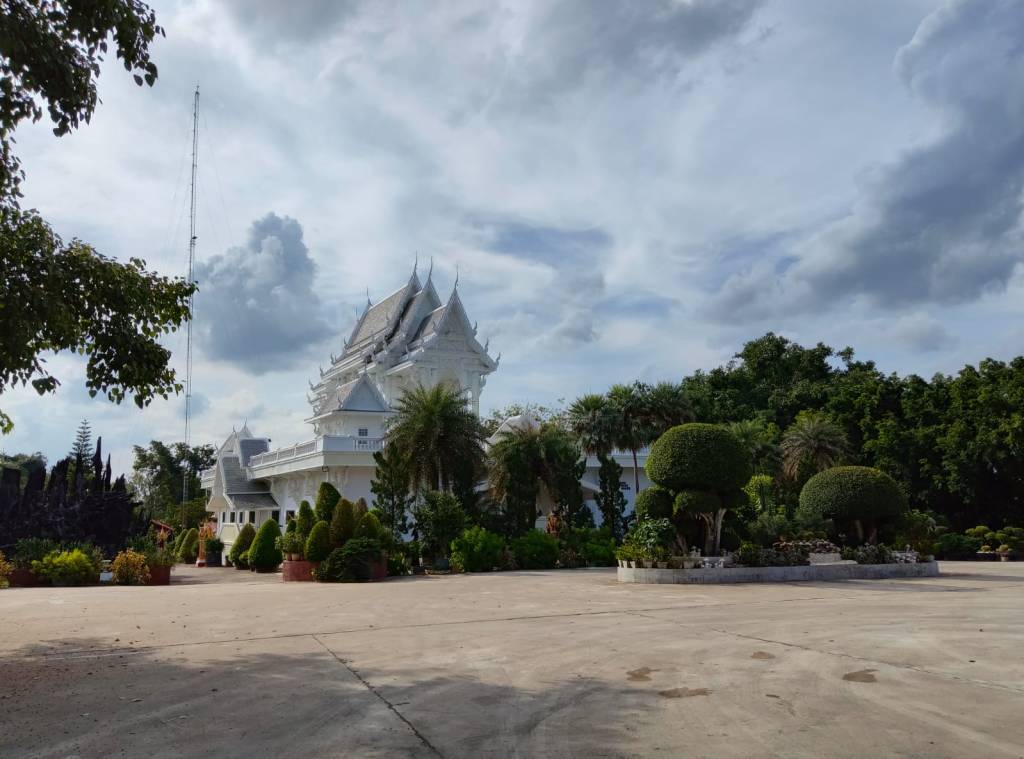
The temple’s Ubosot is dazzling white in color that makes such a stunning contrast to the greenery.
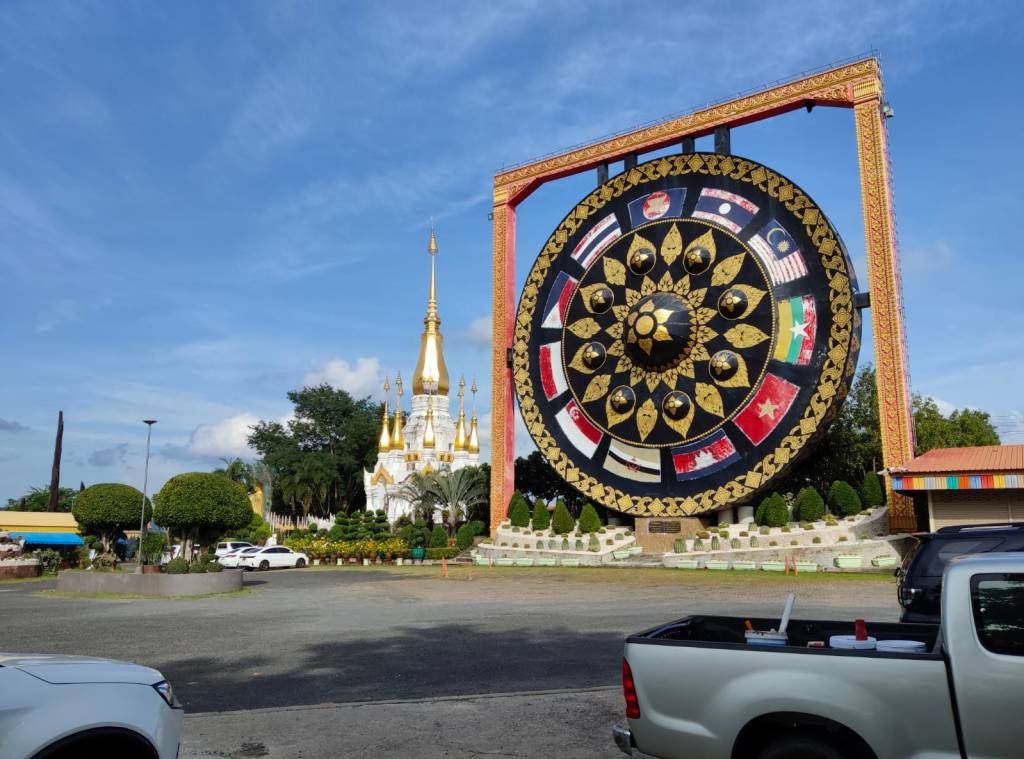
On the Wat’s compound, there are other features that piqued my interest. First, is a garden that serves as a conservation area for different species of Thai orchids. Secondly, is a shine room topped by a graceful golden chedi, surrounded by 8 smaller chedis. Lastly, is a large gong that is near the entrance.
Gongs are said to have originated from East and South East Asia and are used as either percussion or Dharma instruments.
As Dharma instruments, the gong sound is of paramount importance in the temples. When sounded in the morning, it reminds people that it is the end of a long night and they should indulge in deep consciousness. The evening sound prompts everyone to be aware of illusions and unconsciousness. In other instances, the gong sound signals the start of meditation and is also used to gather people for important events like merit making, ordination and funerals.
Though there are different types of gongs, the most common type in Thailand Buddhist temples is the nipple gong. The name is due to the protrusions on their bodies.
The gong at this temple is the largest in Thailand. It has a diameter of 20 meters, weighs 18 tonnes and hangs at a height of 26m. It is so beautiful with Southeast Asian countries’ flags painted on it. It was hang to celebrate the ASEAN community.
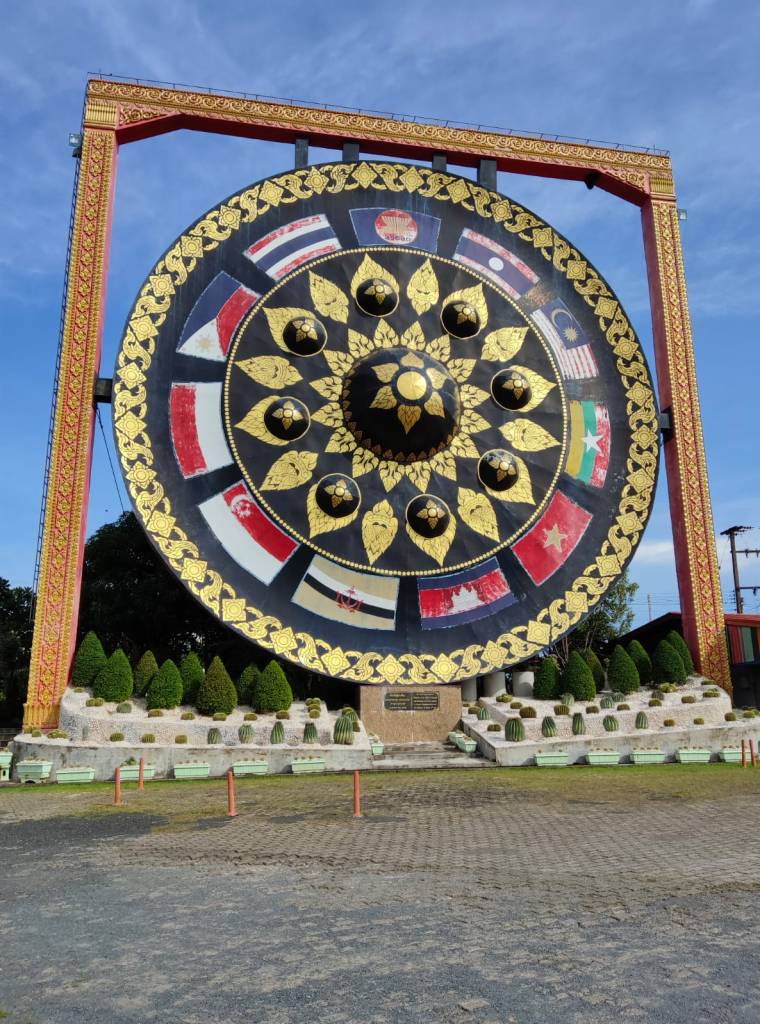
Wat Tham Khuha Sawan in Ubon Ratchathani, nests the largest gong in Thailand.

 Randomness
Leave a comment